
Our Team

Matt Thomson
Professor of Computational Biology, Caltech Investigator, Heritage Medical Research Institute
B.A., Harvard University, 2001; Ph.D., Harvard University, 2011
Matt’s research is focused on quantitative experimental and modeling approaches to gain programmatic control over cell differentiation and function. He applies mathematical modeling, machine learning, and statistical analysis to engineer and rewire cellular physiology and to synthesize new types of cells that don’t exist in nature. He also develops simplified cellular systems in which physical models can be applied to control geometry and morphology.
Matt is also the PI for the Single-Cell Profiling and Engineering Center (SPEC) which brings single-cell genomic capabilities to the Caltech campus and drives new technology development.
Postdocs

Arjuna Subramanian
Active Matter | Single-Cell | Machine Learning
Ph.D., Biochemistry & Molecular Biophysics, Caltech, CA; B.A. in Chemistry, Princeton University, Princeton, NJ
Arjuna is broadly interested in harnessing AI-based protein folding and structure prediction models to study the evolution of cellular systems, including cytoskeletal active matter. He is also developing next-generation protein design workflows informed by constraints on protein evolution.

Fan Yang
Active Matter | Machine Learning
Ph.D. Mechanical Engineering, Princeton University, NJ; B.S. Mechanical Engineering, Tsinghua University, Beijing, China
Fan is working on using engineered protein machines to drive microfluidics towards a universal device that can automate complex tasks via dynamic reprogramming and streamlining operations. He’s built a prototype of a model-driven active matter programming language for flow control that has now been realized in experiments.
PhD Students

Joe Boktor
Single-Cell | Machine Learning
Johns Hopkins University, B.S. Molecular and Cellular Biology
Joe is interested in exploring and repurposing innovative solutions evolved by microorganisms for a broad range of applications. Co-advised by Sarkis Mazmanian, his current projects include discovery of commensal microbiota immune-modulators and engineering of synthetic microbial consortia for bioremediation of environmental pollutants.

Lydia Chen
Single-Cell | Machine Learning
UCSD, B.S./M.S. Molecular and Cell Biology
Lydia is interested in leveraging LLMs to develop analysis methods for single-cell genomics, identifying meaningful patterns in gene expression across diverse tissues and cell types. She is particularly fascinated by the biological question of how gene programs regulate cell morphology, dictating the unique cellular architectures across the human body.
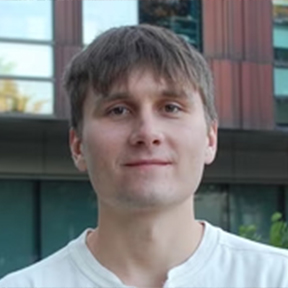
Alexander Detkov
Machine Learning
B.S. Engineering Physics and Mathematics, University of Alberta, Canada
Alex explores intelligence through the lens of dynamical system theory and predictive coding. He is passionate about narrowing the gap between artificial and natural intelligence, drawing inspiration from neuroscience, mathematics, and physics.

Kevin Fleisher
Single-Cell | Machine Learning
Texas A&M University - Corpus Christi, BS. California Institute of Technology, MS.
Kevin is currently interested in constructing predictive models of gene expression, and is using machine learning to uncover how cell state transitions are driven through gene perturbations. His hope is that the coordination of ML methods with biology and physics will lead to actionable insights to treat human diseases.

James Gornet
Machine Learning
Columbia University, New York, NY, B. Sci. Biomedical Engineering
James’ main research interest is understanding human intelligence and reasoning. Currently, he studies navigation as a building block for intelligence. Language and reasoning, for example, navigate an abstract, conceptual space. Using machine learning, neuroscience, and differential geometry, James Gornet studies how neural network may represent and solve these abstract navigation problems.

Surya Narayanan Hari
Machine Learning
BA, BS, MS, Stanford University
Surya is a grad student interested in bringing biological structures to ML. His goal is to apply intelligence from biology to uncover hidden structures in machine learning. He also aims to foster collaborative research using AI across labs.

David Larios
Active Matter
Autonomous University of Nuevo Leon, Mexico. Genomic Biotechnology.

Shichen Liu
Active Matter | Single-Cell | Machine Learning
B.S. Mechanical Engineering, Aerospace Engineering, Case Western Reserve University
Shichen’s work is on combining concepts from physics, biology and engineering to decode non-equilibrium mechanisms in active matter. He is currently working on exploiting the self-organizing mechanisms of active matter for engineering programmable bio-material and to answer the question of “what is life”.

Yunrui Lu
Single-Cell | Machine Learning
MS, Quantitative Biomedical Science, Dartmouth College; BA, BE, Xiamen University
Yunrui is interested in developing ML methods using single cell and spatial transcriptomics to explore tumor heterogeneity and cell cell communication in tumor immune microenvironment.

Zachary Martinez
Active Matter | Single-Cell | Machine Learning
B.S.A. in Biology, The University of Texas at Austin
Co-advised by Professor Richard Murray, Zach’s research is at the interface of synthetic biology and machine learning. His work focuses on building open-source tools for creative protein engineering/discovery and applying said tools to guide the design of synthetic cells.
TRILL website: trill.readthedocs.io

Jiapei Miao
Single-Cell | Machine Learning
National University of Singapore, Singapore, B.S. in Chemistry
Jiapei is interested in exploring the integration of protein language models with molecular dynamics simulations to enhance our understanding of protein structure, function, and dynamics.

Meera Prasad
Active Matter | Single-Cell | Machine Learning
BA, Biology, Bowdoin College
Meera is interested in how tissues form and break down in disease contexts. She is developing an RL + cell-simulation-based framework to determine strategies to control tissue behavior in multicellular systems.
Hunter Richards
Active Matter | Single-Cell | Machine Learning
University of California, Berkeley, B.A. Physics; Kaiser Permanente School of Medicine, M.D. (in progress)
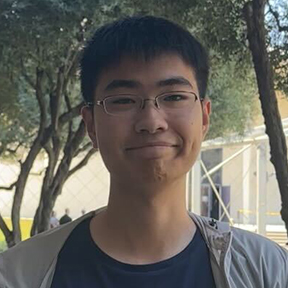
Hao (Harry) Wang
Active Matter | Single-Cell
University of North Carolina, Chapel Hill, B.S. Biomedical Engineering & B.S. Computer Science
Hao Wang is coadviced by Matt Thomson and Magdalena Zernicka-Goetz and is working on developing active matter based tools with microfluidic & simulations for such tools. He is also working on the origin of the broken asymmetry in life.
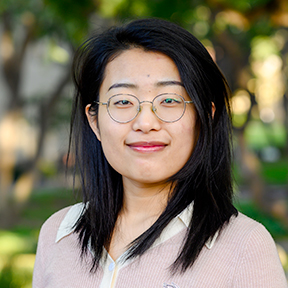
Meng Wang
Machine Learning
M.S. Mechanical Engineering, B.S. Aerospace Engineering, Shanghai Jiao Tong University (SJTU), Shanghai, China
Meng Wang is working at the interface between machine learning and neuroscience, particularly interested in framing the learning behavior in biology into rigorous computation, currently focus on Reinforcement Learning.

Fengqing (Grace) Yu
Active Matter | Single-Cell | Machine Learning
B.S. Computer Science, University of Toronto
Fengqing (Grace) is broadly interested in developing computational models to understand the mechanisms and dynamics underlying biological processes. Currently, she focuses on the T-cell activation process, using ML models and mechanistic models to understand cellular trajectories from single-cell sequencing data.
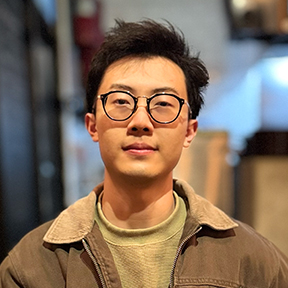
Timothy Zhang
Machine Learning
B.Eng, McGill University
Timothy focuses on understanding how machine learning builds an understanding of the world through prediction and actions. More specifically, he examines the internal representation through a mathematical lens, aiming to form a unified theory that explains how a world model is formed, that can lead to real decision-making AI agents.
- Binglun Shao
- Jiayi Yin
Undergraduate students

Rex Liu
Single-Cell | Machine Learning
B.S. Computer Science, Biology, California Institute of Technology (in progress)
Rex is interested in building bio-inspired algorithms and leveraging AI for drug discovery. His goal is to develop ML frameworks that emulate biological intelligence observed in nature, ultimately applying these innovations to identify novel therapeutics.
Research Staff
Brian Williams
Staff Scientist
Single-Cell
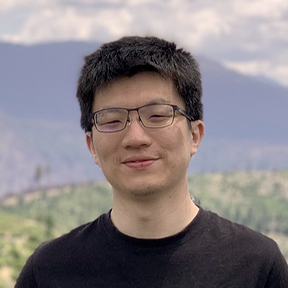
Ph.D. Anatomy, University of California, San Francisco; B.S. Engineering Science, University of California, Berkeley
Yu-Jen Chen
Research Technician
Single-Cell
Ph.D. in Biotechnology; M.S. in Animal Science, National Taiwan University, Taipei, Taiwan
Yu-Jen is interested in wielding immune-cell functions and engineering immune cells in metabolic tissues to curb adipose inflammation in obesity, hepatic inflammation in fatty liver, and cell senescence in the aging process.




Thomson Lab Alumni
- Aman Bhargava (Temporary position at aibread.com)
- Michael Zellinger (Position located in San Francisco, CA)
- Alec Lourenço (Founder, Weekend Inc.)
- Bibi Najma (Postdoc, Nirmal Lab, Brigham and Women’s Hospital)
- Jialong Jiang (Post doc at Rockefeller University)
- Xiaoqiao Chen (Tower Research Capital)
- Sisi Chen (Sr. Director of Platform Technology, Apertura)
- Tatyana Dobreva (Founder at ImYoo)
- David Brown (Founder at ImYoo)
- Jeff Park (Founder at ImYoo)
- Cong Lin (Grad Student at UCSD)
- Tiffany Tsou (Grad Student at NYU School of Medicine)
- Emanuel Flores Bautista (Founding engineer, CaineX)
- Enrique Amaya Perez (Engineer, undisclosed location)
- Yuning You (Assistant professor, The Chinese University of Hong Kong, Shenzhen)
- Danil Akhtiamov
- Shahriar Shadkhoo (Physical AI Researcher, Lyte)
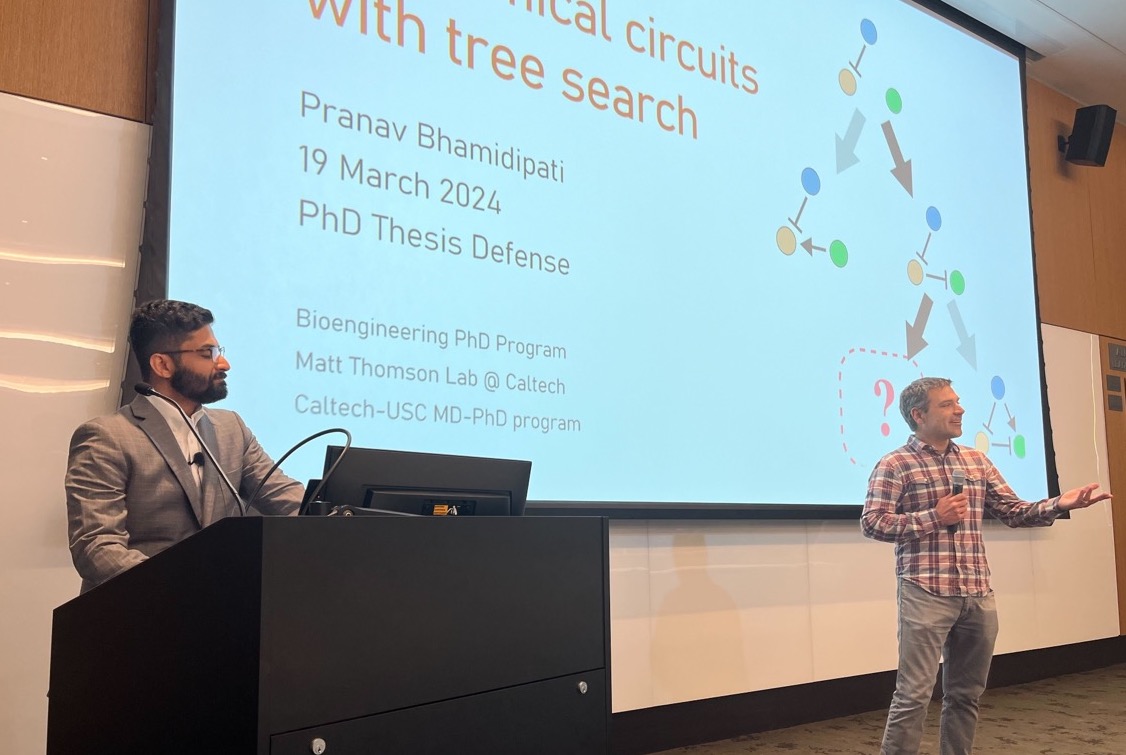
- Pranav Bhamidipati (MD-PhD at University of Southern California)
- Zitong (Jerry) Wang (Indpendentent fellow at Westlake University)
- Guru Raghavan (Founder & lead research scientist at Yurts AI)
- Zijie Qu (Assistant Professor at Shanghai Jiao Tong University)
- Dominik Schildknecht (Associate at McKinsey & Company, Munich)
- Paul Rivaud (Research Engineer at Inserm)
- Tyler Ross (Postdoc at Caltech)